Vitamin C
Many red fruits contain Vitamin C. Strawberries and red currants are commonly referenced as sources.
A look at how red fruits can fit into everyday meals and routines, based on general nutrition information.
Red fruits stand out for their vivid colors, which come from natural compounds like anthocyanins and lycopene. These pigments are part of what makes red fruits a popular topic in nutrition discussions.
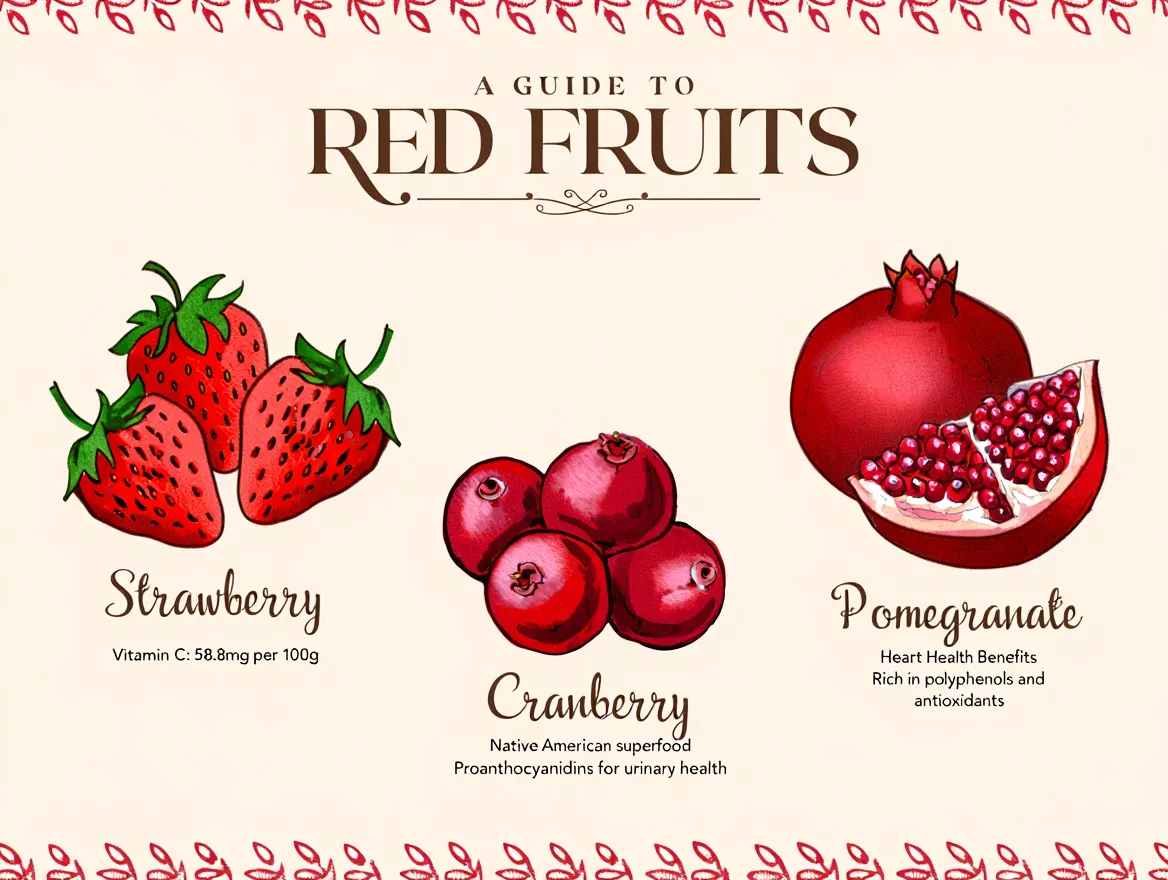
An overview of the nutritional components commonly associated with popular red fruits.
Many red fruits contain Vitamin C. Strawberries and red currants are commonly referenced as sources.
The deep red and purple hues of berries indicate the presence of anthocyanins, natural compounds that are a subject of ongoing nutritional research and interest.
Red fruits contribute dietary fiber, which is generally considered a beneficial component of a varied diet. Raspberries are especially notable for their fiber content.
Many red fruits have a high water content and can be enjoyed alongside regular water consumption as part of a balanced diet.
The natural sugars in red fruits provide flavor and can be enjoyed as part of a balanced approach to nutrition, offering a naturally sweet option.
Potassium, manganese, and other trace minerals are found in various red fruits, contributing to the overall nutritional diversity of your diet.
Step-by-step ideas for making red fruits a consistent part of your daily nutrition.
Begin by adding a single serving of red fruits to one meal per day. A handful of berries with breakfast is a simple starting point.
Try a different red fruit each week. Rotate between strawberries, raspberries, cherries, and cranberries to discover your preferences.
Pair red fruits with nuts, yogurt, or whole grains for a more complete nutritional profile and enhanced flavor combinations.
Maintain a supply of frozen red fruits for convenience. They work well in smoothies and can be enjoyed when fresh options are limited.
Pay attention to which fruits and preparation methods you enjoy most. Sustainability comes from choosing what you genuinely like.
Red fruits can be enjoyed at any time of day. Many people prefer them in the morning as part of breakfast, or as an afternoon snack. There is no single best time — choose what fits your routine.
General nutrition guidelines suggest including a variety of fruits in your diet. One to two servings of red fruits per day is a reasonable amount for most people as part of overall fruit intake.
Dried red fruits like cranberries and goji berries can be a convenient option. They are more concentrated in sugars and calories, so portion awareness is helpful when enjoying them.
Discover practical ways to incorporate red fruits into your everyday meals and routines.
All materials and practices presented are educational and informational in nature and are aimed at supporting general well-being. They do not constitute medical diagnosis, treatment, or recommendation. Before applying any practice, especially if you have chronic conditions, consult a healthcare professional.